AI Register Template vs. Purpose-Built Tool: What Does Your Company Actually Need?

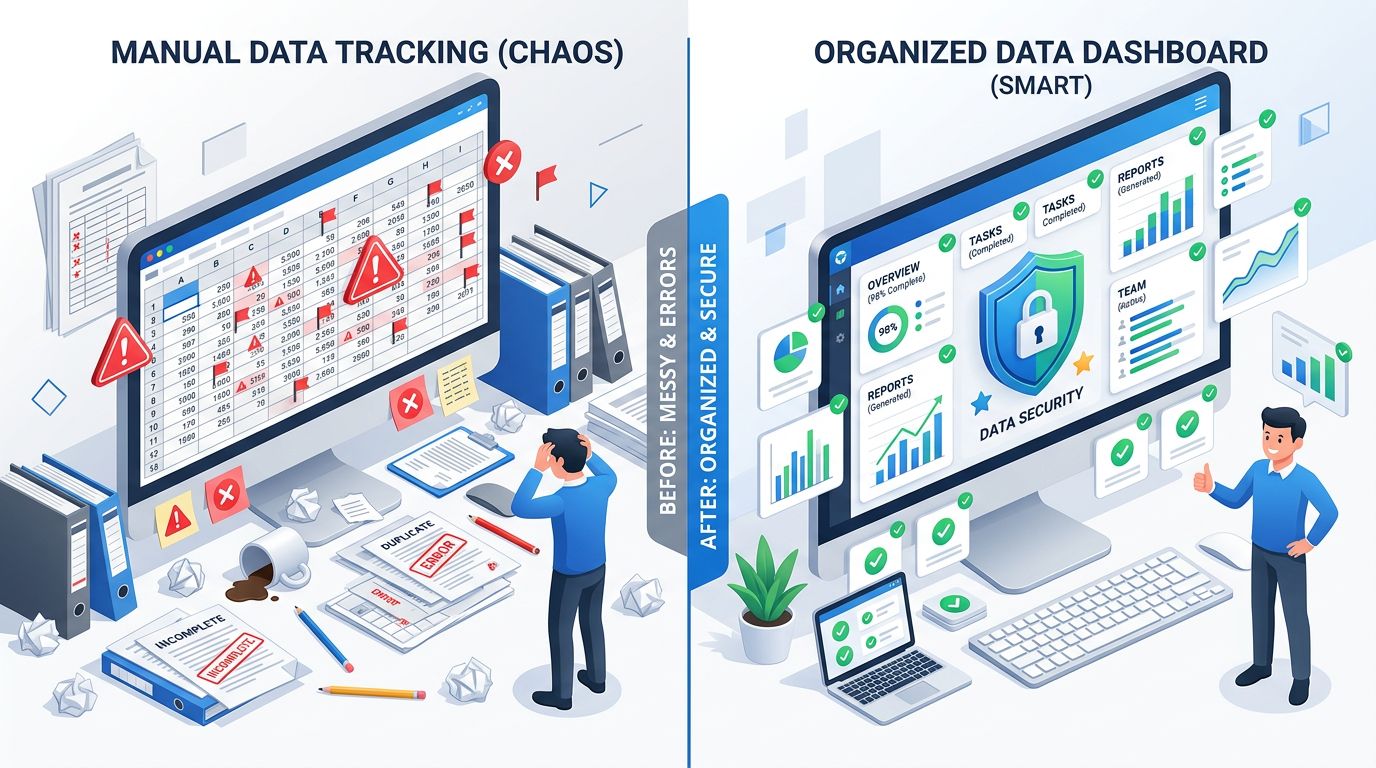
AI Register Template vs. Purpose-Built Tool: What Does Your Company Actually Need?
Meta-Description: Comparison: free AI register spreadsheet template vs. a purpose-built AI register tool. What the ISMS-Ratgeber template covers, where it falls short, and why Mittelstand companies need more.
Target audience: DPOs, compliance managers, IT leads at DACH companies (30–150 employees)
The Starting Point: Your Team Already Uses AI
The majority of German companies already use AI tools — often without management awareness. ChatGPT for emails, Copilot for code, AI features in CRM: usage is already a reality.
Since August 2025, the EU AI Act (Article 4) requires every company deploying AI to document AI literacy. Full enforcement starts August 2026 with fines up to EUR 35 million.
The first question: How do I document which AI my company uses?
The ISMS-Ratgeber KI-Register Template
The ISMS-Ratgeber offers a free spreadsheet template for an AI register with 15 fields:
| # | Field | Purpose |
|---|---|---|
| 1 | AI System Name | Tool identification |
| 2 | Responsible Person/Dept | Ownership |
| 3 | Purpose and Scope | Business use case |
| 4 | Risk Category (EU AI Act) | Minimal / Limited / High / Prohibited |
| 5 | Vendor/Provider | Supplier information |
| 6 | Technical Description | How it works |
| 7 | Data Types Used | Data categories |
| 8 | Personal Data Involved | Yes/No |
| 9 | DPIA Required | Data protection impact assessment |
| 10 | System Interfaces | Integration points |
| 11 | Transparency Measures | Explainability |
| 12 | Security Measures | Technical controls |
| 13 | Status | Pilot / Operational / Retired |
| 14 | Last Review | Review date |
| 15 | Notes | Free text |
The good: It's free, covers the basics, and is a solid starting point for companies starting from zero.
Where the Spreadsheet Hits Its Limits
1. No Risk Classification Logic — Just a Text Field
The template has a "risk category" field, but no logic behind it. Your employee must decide themselves whether ChatGPT is "minimal" or "limited" risk. Do they know Article 6 and Annex III of the AI Act? Probably not.
AI-Casefile: AI-powered classification automatically determines the risk tier based on the use case description — with reasoning and EUR-Lex references.
2. No Approval Workflow
The spreadsheet documents what exists. But who approved the deployment? When? Under what conditions? A spreadsheet has no audit trail.
AI-Casefile: Submit, review, approve — with full history. Every decision is traceable.
3. No GDPR Art. 30 Integration
The template asks about "personal data" (Yes/No) but not legal basis, data subject categories, recipients, or retention periods. Your DPO needs exactly this information.
AI-Casefile: Every use case includes full GDPR Art. 30 fields. One record, two regulations.
4. Stale in Three Months
Spreadsheets don't get maintained. New tools get added, old ones don't get updated. After one quarter, the spreadsheet is outdated.
AI-Casefile: Automatic review cycles remind you of overdue reassessments. New AI tools are captured through the approval workflow.
5. No Audit-Ready Export
When an auditor, your DPO, or a vendor questionnaire asks for your AI register: can you generate an audit-ready PDF from a spreadsheet?
AI-Casefile: One-click PDF with full inventory, risk classifications, approval history, and staff attestations.
Side-by-Side Comparison
| Criterion | AI Register Template (Spreadsheet) | AI-Casefile |
|---|---|---|
| Price | Free | From EUR 49/month |
| Setup | Instant | 5 minutes |
| Risk classification | Manual (text field) | AI-powered with reasoning |
| GDPR Art. 30 | Only "Personal data Yes/No" | Full processing record |
| Approval workflow | None | Submit / Review / Approve |
| Audit trail | None | Complete |
| Review reminders | None | Automatic |
| PDF export | No | One click |
| AI literacy tracking | No | Training packs + attestations |
| Multi-user access | Shared file | Role-based (Admin, DPO, Dept Owner) |
| API access | No | REST API + MCP Server |
When Is the Spreadsheet Enough?
Honestly: for getting started. If you don't have an AI register today and need one tomorrow, download the ISMS-Ratgeber template and fill it in. That's better than nothing.
But: the spreadsheet is a starting point, not a permanent solution. Once you track more than 5 AI tools, once your DPO needs GDPR details, once an auditor asks — you need a system that scales.
When Do You Need More?
- More than 10 AI tools in use across the company
- Multiple departments using AI
- Your DPO needs GDPR Art. 30 data for AI systems
- You need to answer vendor questionnaires about AI governance
- You want to establish an approval process for new AI tools
- Management needs an overview
Conclusion
The ISMS-Ratgeber spreadsheet template is a good first step. But the EU AI Act demands more than a spreadsheet: risk classification, documentation, approval processes, and AI literacy attestations.
AI-Casefile automates these requirements in a system that's ready in 5 minutes — with a 14-day free trial, no credit card required.
Sources and References
- ISMS-Ratgeber: KI-Register Template
- EU AI Act Art. 4 — AI Literacy
- EU AI Act Art. 6 — Classification
- EU AI Act Art. 26 — Deployer Obligations
- GDPR Art. 30 — Records of Processing
- DSB Muenster: EU AI Act — Action Needed for Mittelstand
- Mittelstandsbund: EU AI Act — What Companies Need to Know
- IHK Cologne: AI Act Regulations
- HBR: How SMEs Can Prepare for EU AI Regulations